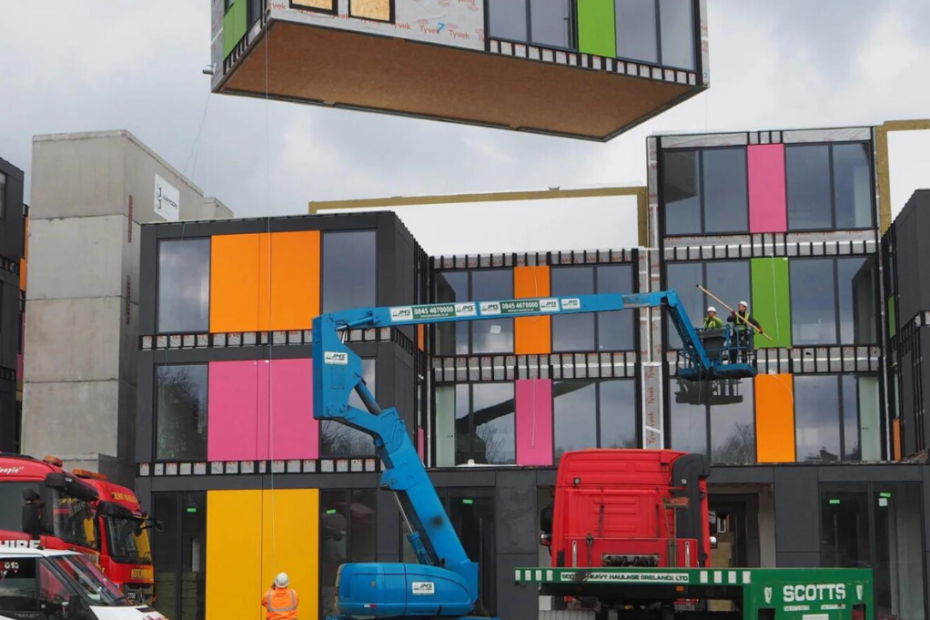
In an era marked by rapid urbanization, housing shortages, and environmental challenges, modular housing has emerged as a game-changing solution. This innovative approach to construction is transforming the way we think about building homes, offering a sustainable, cost-effective, and efficient alternative to traditional methods.
What is Modular Housing?
Modular housing refers to homes that are constructed off-site in factory-controlled environments and then assembled on-site. These pre-fabricated modules are built to the same standards as traditional housing but come with the added benefit of streamlined construction processes. Each module is like a “building block,” designed to fit seamlessly into the overall structure, whether it’s a single-family home, apartment complex, or office space.
Advantages of Modular Housing
1. Speed of Construction
One of the most significant advantages of modular housing is the drastically reduced construction time. Because the modules are manufactured in factories, construction can proceed without being hindered by weather conditions or other on-site delays. Simultaneously, site preparation and module manufacturing can occur concurrently, cutting total build time by up to 50% compared to traditional methods.
2. Cost-Effectiveness
Modular construction often results in significant cost savings. Factory production reduces waste, and the controlled environment allows for better resource management. Additionally, labor costs are lower due to the reduced on-site construction time and the need for fewer workers.
3. Sustainability
Sustainability is at the core of modular housing. Factories use precise measurements to minimize material waste, and many modular designs incorporate eco-friendly materials. Additionally, because modules are transported and assembled on-site, the environmental footprint is smaller compared to traditional construction.
4. Design Flexibility
Contrary to common misconceptions, modular housing is highly customizable. Homeowners and developers can choose from a wide range of layouts, finishes, and features. Modular designs are also scalable, making it easy to add additional units as needed.
5. Quality Assurance
The factory-controlled environment ensures consistent quality across all modules. Inspections and testing are conducted at multiple stages of the manufacturing process, ensuring compliance with building codes and standards.
Challenges and Misconceptions
Despite its advantages, modular housing does face some challenges. Transportation of modules can be costly, especially for remote areas, and assembling modules on challenging terrains can be complex. Additionally, modular housing is sometimes perceived as “low-quality” or “temporary,” a misconception that lingers despite the industry’s advancements in design and durability.
Applications of Modular Housing
The versatility of modular housing makes it suitable for various applications:
Affordable Housing: Modular housing is an ideal solution for addressing housing shortages in urban and rural areas.
Disaster Relief: Rapidly deployable modular homes can provide shelter to those displaced by natural disasters.
Commercial Spaces: Modular construction is increasingly used for offices, schools, and healthcare facilities due to its efficiency and scalability.
Luxury Living: High-end modular homes are gaining popularity, showcasing that pre-fabricated doesn’t mean compromising on style or comfort.
The Future of Modular Housing
As technology continues to advance, the modular housing industry is poised for significant growth. Innovations like 3D printing, smart home integration, and renewable energy systems are likely to enhance the appeal and functionality of modular homes. Furthermore, governments and developers worldwide are beginning to recognize modular housing as a viable solution to the global housing crisis.
Conclusion
Modular housing represents a bold step forward in construction, combining speed, affordability, and sustainability. While it is not without its challenges, its potential to revolutionize the housing industry is undeniable. As society grapples with growing urban populations and environmental concerns, modular housing offers a promising path toward a more efficient and sustainable future.